 516-812-0917
 Help
Help Live Chat




Alarm Monitoring: History, Technology & Impact
From Morse’s telegraph and the first call boxes to today’s internet-connected central stations — how alarm monitoring evolved, and why it remains one of the most effective ways to protect a home or business.
What Is Alarm Monitoring?
Alarm monitoring is a service provided by a security company, or central monitoring station, whereby a commercial building or residence is remotely monitored using an advanced network of alarms and detectors. In the event of a fire, burglary, gas leak, or medical emergency, an alarm is triggered, sending a signal to a team of trained operators who then alert police, fire, or emergency personnel if necessary. A detailed report of every incident is then automatically filed in a corporate database.
The advent of the internet and new technologies have helped the alarm-monitoring industry see tremendous growth over the past decade. Highly sensitive detection technologies can now monitor a multitude of safety hazards simultaneously — including intrusion, fire, and flood, as well as harmful radiation, carbon monoxide (CO), combustibles (methane, propane, hydrogen), and toxic gases. Automated alarm receivers retrieve and analyze transmitted protocols using central-monitoring software. Digital transmission and internet connectivity have paved the way for greater efficiency and protection in recent years — but this highly advanced system of 24/7 remote monitoring came from much humbler beginnings.
I. The Early Years: Morse’s Telegraph Shifts the Paradigm
Instrumental in the evolution of modern monitoring systems was the invention of the telegraph, by Samuel Morse, in 1841. Using a pulsating electromagnet to create a series of dots and dashes on paper, Morse proved that signals could be transmitted via wire. Public indifference contributed heavily to the delayed adoption of his invention. Finally, three years and $30,000 later, a telegraph line was run from Baltimore to the Capitol building in Washington. Soon after, Congress saw the fruits of Morse’s revolutionary invention firsthand, in the form of a Morse Code message sent by wire that read, “What hath God wrought?”
II. First Alarm Systems: Burglars and Open Flames Beware
The concept of using the telegraph to relay alarm signals came only a few years later, in 1847, when the city of New York began sending alarm messages between City Hall and the fire department.
In 1851, an affluent doctor named William Channing convinced the city of Boston to install a newer public alarm system, which employed a series of call boxes (or pull boxes) connected by a network of telegraph wires. The call boxes allowed the public to alert the city fire department to the location of a fire.
However, Channing’s system — and all previous systems — had a problem: it couldn’t remotely trigger the fire-station bells used to signal a fire. This was quickly solved by electrician Moses Farmer, who implemented an electromagnet that could ring a bell by breaking and completing a circuit.
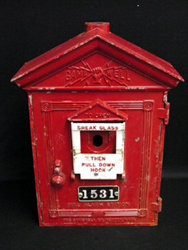
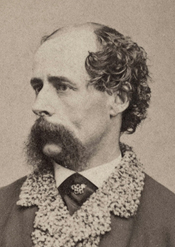
While Channing’s system was being implemented, a Unitarian minister living in the Boston suburbs named Augustus Pope developed a burglar alarm using Farmer’s remote-alarm invention. Recognizing the profitability of these new burglar and fire alarms, Pope’s and Channing’s patents were subsequently bought by two entrepreneurs: Edwin Holmes and John Gamewell, respectively.
Holmes began selling burglar alarms in Boston, but consumer skepticism about electric alarms in households led to poor sales. So Holmes moved his company to New York City, which had garnered a reputation for burglary and crime. This proved a strategic victory: demand for his home alarms rose, and by 1877 the Holmes Burglar Alarm Company established the first central station in New York City. Now an entire network of alarms could be monitored from a single location, offering local businesses and homes an even greater level of security.
By 1895, John Gamewell and his business partner, James M. Gardiner, had found similar success with their fire-alarm telegraph products. Despite competition from 36 other companies in the industry, Gamewell amassed a 95% market share.
Source: IFPO, The Professional Protection Officer: Practical Security Strategies and Emerging Trends (Butterworth-Heinemann, p. 90; ISBN 978-1-85617-746-7), and the National Fire Protection Association.
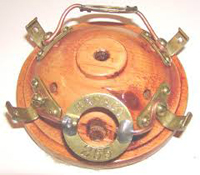
A careful study during the past year reveals the fact that, out of the one hundred and nine actual fires that have occurred, fully two-thirds of the alarms have been struck [by the automatic telegraph fire-alarm boxes] before any appearance of the fire could be seen from the top of the City Hall.
III. The Early 1900s
As multi-signal call boxes became more common, remote monitoring stations could keep an even closer eye on public safety. During this time, watchmen (or roundsmen) were employed by businesses to send scheduled signals to the monitoring station. If a scheduled signal was ever missed, emergency personnel were immediately dispatched to the site.
IV. 1930s–1970s: Technological Innovation
This period saw a wave of new safety regulations and technological advancement in alarm monitoring and detection.
V. Security for the New Age
Today, internet technology has completely revolutionized the way security systems collect and transmit information. Alarm monitoring systems are more prevalent and effective than ever. Networks now employ motion detectors, cameras, glass-break detectors, and gas detectors to provide safety solutions for commercial facilities and residences. Digital imaging and high-speed networks make live video monitoring possible for any user who can afford the service, and sophisticated detection equipment can sense environmental changes faster than ever before.
What new alarm-monitoring technology lies on the horizon is nearly impossible to predict — but whatever the future holds will only strengthen the ability of these systems to monitor and protect the people who rely on them.
VI. Burglary & Alarms, by the Numbers
Why monitoring still matters — current figures from the FBI and a University of North Carolina at Charlotte study that surveyed convicted burglars.
Sources: FBI Crime Data Explorer (2024) and “Understanding Decisions to Burglarize from the Offender’s Perspective,” UNC Charlotte.
Alarms, Detection & Surveillance from JMAC Supply
JMAC Supply is an authorized distributor of intrusion alarms, fire and life-safety detection, access control, and video surveillance. Whether you’re protecting a home or a multi-site facility, our team can help you spec the right system. Curious about the history of break-ins? Read our history of robbery and burglar alarms.
Frequently Asked Questions
Quick answers about alarm monitoring.
Protecting a Home or Facility?
JMAC Supply has the alarm, detection, access-control, and surveillance hardware to build your system — plus the expertise to help you choose it.
